
When perimenopause arrived, I felt like a stranger in my own body. The woman I’d known for decades seemed to vanish overnight, replaced by someone I didn’t recognise – anxious, exhausted, and completely disconnected from herself. If you’re reading this and nodding along, know that you’re not alone in this journey. What I discovered through yoga is that this phase isn’t about losing yourself – it’s about finding a deeper, more authentic version of who you’ve always been.
Finding My Body Again Through Movement
The disconnect I felt during those early perimenopause symptoms was overwhelming. My body felt foreign, unpredictable, and frankly, like it was working against me. Night sweats meant sleep became elusive, and the emotional ups and downs left me feeling completely ungrounded. That’s when I decided something had to change. I leant into my yoga practice – not the intense Ashtanga yoga I’d practised in my forties but something gentler, more nurturing, more yin.
Through embodied yin yoga and mindful movement, I slowly began to rebuild the relationship with my body. Simple poses like child’s pose, supported backbends, and gentle cat-cow flows became my anchors. These weren’t about pushing or forcing – they were about listening. Each breath, each gentle stretch was a conversation with my changing body, learning to work with my hormonal changes rather than fighting them.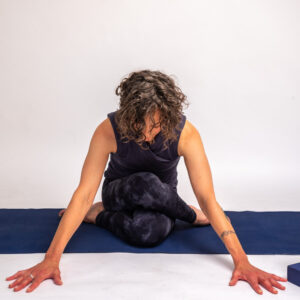
The transformation was slow and gradual; I stopped seeing my body as broken and started appreciating its incredible resilience. This shift in perspective became the foundation for everything else that followed in my perimenopause journey.
Calming the Storm Inside
If you’re experiencing perimenopause anxiety, you know how it can feel like a constant storm brewing inside. The simplest decisions felt overwhelming, and my nervous system seemed stuck in permanent overdrive. This is where yoga breathing and gentle movements became my lifeline for anxiety relief.
I discovered that to regulate my nervous system I did not need complicated poses or lengthy sessions. Sometimes it was just five minutes of slow breathing when anxiety peaked, or a few gentle forward folds when I felt scattered. Restorative poses like legs up the wall became sacred moments of peace in my day. These practices taught me to pause and respond rather than react to the emotional waves [even panic attacks] that perimenopause can bring.
What amazed me most was how the slowing down and softening of yin yoga helped me find calm in the chaos. Instead of being at the mercy of my hormones, I had tools to support myself through the challenging moments. This sense of empowerment was exactly what I needed to navigate this transition with more grace and self-compassion.
A Complete Approach to Feeling Better
Here’s what I wish someone had told me earlier: because yoga isn’t just about physical poses – it’s about nurturing every aspect of your wellbeing – it is a perfect holistic treatment for perimenopause and beyond. Yoga touches your emotional, mental, and physical health in ways that feel deeply healing and sustainable.
Mentally, my yoga practice sharpened my focus and lifted the brain fog that had become my constant companion. Emotionally, it gave me space to process the grief of this life transition while building genuine self-compassion. Physically, my sleep improved, tension melted away, and my energy began to return – not the frantic energy of my younger years, but something steadier and more sustainable.
Perhaps most importantly, this journey taught me that reclaiming identity during perimenopause isn’t about going back to who you were – it’s about embracing who you’re becoming. Through yoga, I’ve learned to honour this phase as a time of profound growth and wisdom. The woman emerging from this transition is more connected to her body, more compassionate with herself, and more empowered in her choices.

Your Journey Forward
If you’re in the midst of your own perimenopause journey, remember that healing happens in community. You don’t have to navigate this alone, and you don’t have to have it all figured out. Start small – maybe with five minutes of gentle breathing or a few nurturing stretches.
Listen to your body, honour where you are, and trust that this practice will meet you exactly where you need it most.

